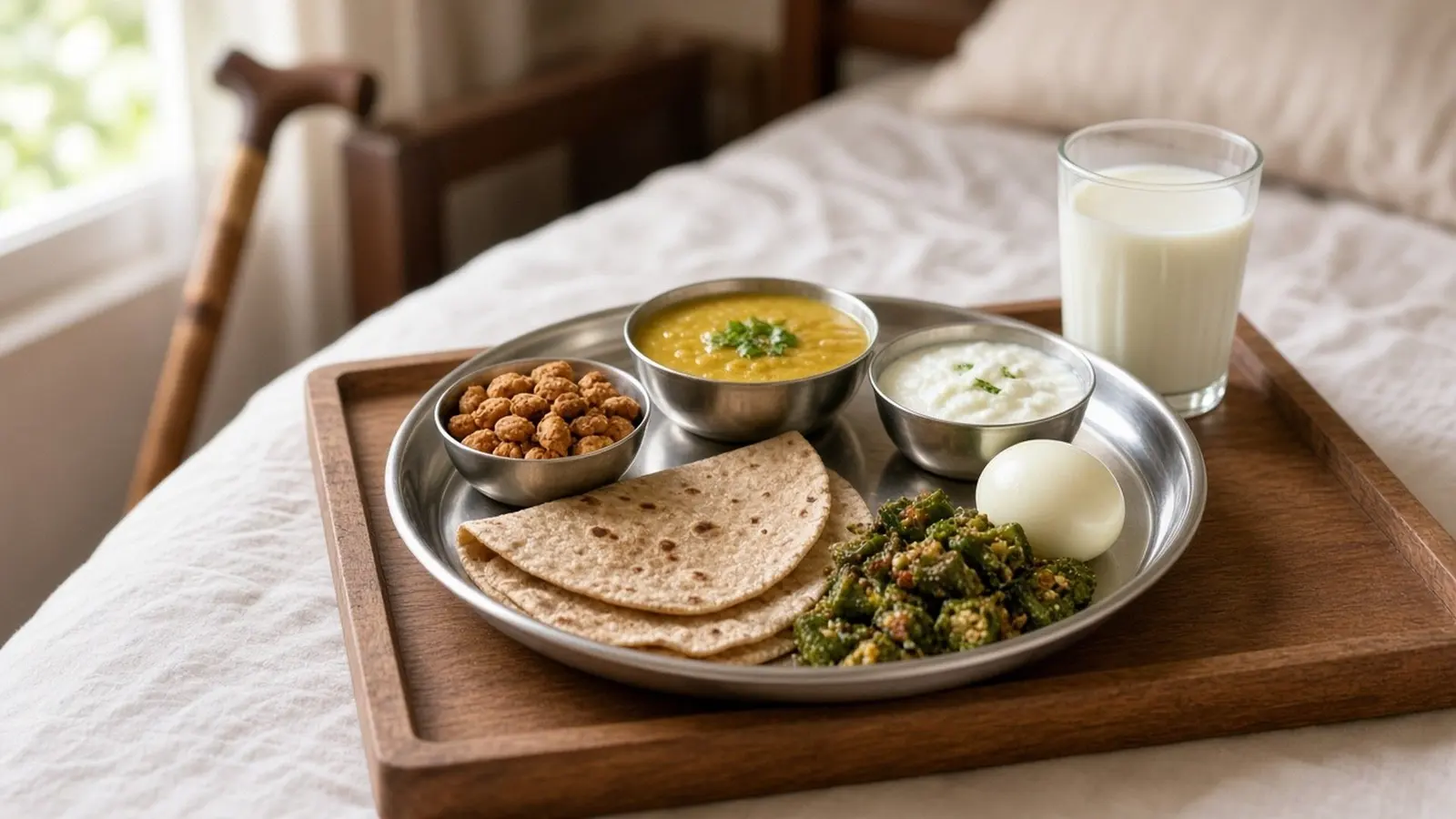
After a knee replacement, the diet that helps most is an ordinary balanced Indian diet with more protein, enough iron, calcium and vitamin D, 30 g of fibre a day and plenty of water. Protein limits the muscle loss that follows surgery, iron rebuilds blood, fibre and fluid counter the constipation that opioid painkillers cause. No single food speeds healing, and no food needs to be banned unless your doctor says so for a specific medicine.
Why does diet matter after a knee replacement?
Diet matters because surgery and the weeks of reduced walking that follow strip muscle from the operated leg, and food is the raw material for rebuilding it. A 2025 narrative review in Experimental Physiology cites an MRI study that measured a 14% decline in quadriceps (front-of-thigh) muscle volume just two weeks after total knee replacement in patients over 65. The same review notes that older arthroplasty patients were observed eating under 0.6 g of protein per kg of body weight a day during a 6-day hospital stay, well below the roughly 0.8 g per kg that general guidelines set, and that surgical guidelines advise intakes above 1.2 g per kg before surgery.
The NHS says you start walking with crutches or a frame soon after the operation, usually go home 1 to 4 days later, and should expect recovery to take several months or longer. The AAOS (American Academy of Orthopaedic Surgeons) tells patients preparing for joint replacement to eat a diet rich in protein, vitamins and minerals to support healing.
The practical goals for the first three months are simple:
- Protein at every meal, to limit muscle loss.
- Enough iron, to rebuild blood after surgical blood loss.
- Calcium and vitamin D, for the bone that the implant sits in.
- Fibre and fluid, to counter the constipation that painkillers cause.
- No big weight gain while you cannot exercise as usual.
A dietician can turn these goals into a plan that fits your kitchen, your budget and any diabetes or kidney disease you already have.
How much protein do you need, and which Indian foods give it?
You need protein at every meal, and more than you ate before surgery. The Experimental Physiology review cites guidelines that advise more than 1.2 g per kg of body weight a day around surgery, against a general adult requirement of about 0.8 g per kg. For a 65 kg adult that means roughly 80 g of protein a day instead of about 52 g. A 2023 systematic review in Sports Medicine and Health Science found that protein or amino-acid supplements after orthopaedic surgery helped limit muscle loss, but the trial regimens were too varied to recommend one dose, and the knee replacement trials used 20 g of essential amino acids twice a day from one week before to two weeks after surgery.
The review also found the supplements did not reliably improve strength when there was no exercise component. Food plus the exercises your physiotherapist sets is the combination that works.
Indian protein sources that are easy to eat after surgery:
- Dal, rajma, chana, sprouts and soya chunks or tofu.
- Milk, curd, paneer and buttermilk (chaas).
- Eggs, boiled or in a bhurji.
- Chicken, fish and lean mutton if you eat them.
- Peanuts, roasted chana and seeds as snacks.
Spread protein across breakfast, lunch, an evening snack and dinner rather than one large portion. A protein powder is not needed if meals cover the target; if you cannot eat enough, ask your orthopaedic surgeon or dietician before buying one, especially if you have kidney disease.
Do you need extra iron after surgery?
Most people need to eat iron-rich food after a knee replacement, and some need iron tablets, because the operation causes blood loss. The NHS says bleeding is a common cause of iron deficiency anaemia, and lists tiredness, breathlessness, palpitations and pale skin as its symptoms, all of which slow rehabilitation. The NHS daily iron amounts are 8.7 mg for men and for women aged 50 and over, and 14.8 mg for women aged 19 to 49.
Good sources the NHS names are red meat, liver, beans and chickpeas, nuts, dried fruit, fortified breakfast cereals and soy flour. In an Indian kitchen that means dal, rajma, chana, soya, dates and raisins, bajra and ragi, green leafy vegetables, and meat or liver for non-vegetarians.
Absorption matters as much as the amount:
- The NHS says tea, coffee and large amounts of milk reduce iron absorption; keep chai and coffee away from iron-rich meals and tablets.
- The NHS says orange juice after an iron tablet may help absorption; a glass of nimbu pani or amla works the same way through vitamin C.
- Phytic acid in wholegrain cereals can block iron from other foods, so do not rely on wholegrains alone.
If your blood test shows low haemoglobin, the NHS says iron tablets are usually taken for about 6 months and can cause constipation, dark stools and stomach upset; take them with food and keep going. Supplement doses above 20 mg a day cause side effects, so do not self-prescribe. A CBC test at the 6-week review shows whether it is working.
How much calcium and vitamin D do you need for the new joint?
Adults need 700 mg of calcium a day, according to the NHS, and 10 micrograms (400 IU) of vitamin D. The implant is fixed into living bone, and calcium and vitamin D are what that bone is built and maintained with; the NHS says vitamin D regulates calcium and phosphate in the body and keeps bones, teeth and muscles healthy.
NHS-listed calcium sources are milk, cheese and other dairy foods, green leafy vegetables such as kale and okra (bhindi) but not spinach, calcium-fortified soya drinks, fortified flour products, and fish eaten with the bones such as sardines. Two to three servings of milk, curd or paneer a day plus vegetables usually reach 700 mg. The NHS warns that more than 1,500 mg a day from supplements can cause stomach pain and diarrhoea, so do not stack calcium tablets on top of a dairy-rich diet without a blood test.
Vitamin D is the weaker link in India. The NHS lists people of South Asian background, people who are rarely outdoors and people who cover most of their skin as groups at higher risk of deficiency, and advises everyone to consider a 10 microgram daily supplement when sunlight is weak. A person recovering indoors for weeks fits that description. Food sources are limited: oily fish, red meat, egg yolks and fortified foods. The NHS upper limit for adults is 100 micrograms (4,000 IU) a day, so avoid the high-dose weekly sachets unless a doctor has prescribed them after a vitamin D test.
How do you prevent constipation from painkillers?
Prevent constipation by taking 30 g of fibre a day, drinking plenty of water, walking every day and asking a pharmacist for a laxative early if it starts. The NHS lists constipation as a common side effect of codeine, and the same applies to tramadol and other opioid painkillers that Indian hospitals prescribe after a knee replacement. The NHS also lists not moving enough and long periods sitting or lying down as causes, which describes the first weeks after surgery exactly.
The NHS fibre target for adults is 30 g a day; most adults manage only about 20 g. A high-fibre food has 6 g or more per 100 g. Indian foods that get you there:
- Whole wheat roti, dalia, oats and brown rice instead of maida and white rice.
- Dal, rajma, chana and other pulses at both main meals.
- Vegetables and fruit with skin: guava, papaya, pear, apple, banana.
- A spoon of psyllium (isabgol), flaxseed or wheat bran added to curd or water.
The NHS says to add fibre gradually and drink plenty of fluids, because fibre without water makes stools harder. Iron tablets add to the problem.
The NHS says most laxatives work within 3 days and should be used short term, and that you should see a doctor if opioid painkillers are causing constipation rather than stopping the painkiller on your own. Also note the NHS advice to avoid alcohol with codeine, because it increases side effects such as drowsiness, and to avoid driving while drowsy.
Which foods and drinks should you limit after a knee replacement?
Limit alcohol, sugary and fried snacks, and anything a specific medicine interacts with; no ordinary food needs to be banned. The NHS says it is best not to drink alcohol while taking codeine because it raises the risk of side effects, and that you should not drink large amounts of alcohol on warfarin.
The old advice to avoid broccoli, spinach, cabbage and other vitamin K foods after surgery is wrong for most people. The NHS warfarin page says these foods can affect how warfarin works, but that you can still eat them and should talk to your anticoagulation clinic for advice, and that you should not make big changes to your diet without telling your doctor. A steady, consistent intake is the aim. Most Indian patients are now sent home on a newer blood thinner or aspirin rather than warfarin; ask which one you have, because the vitamin K caution only applies to warfarin. On warfarin the NHS does say: no cranberry juice or cranberry products, and no grapefruit juice.
Fried and sugary foods add calories while you are moving less and do nothing for healing, and the NHS notes that chai and coffee with meals reduce iron absorption.
See a doctor the same day if you have fever, pus or increasing redness at the wound, new calf pain, or chest pain or breathlessness. Call 112 for chest pain with breathlessness.
Turmeric, fish oil or ginger capsules have no cited evidence for faster recovery, and some affect bleeding; tell your surgeon before taking any.
What does a sample Indian day look like after knee replacement?
A good day gives protein at every meal, two or three dairy servings, pulses twice, vegetables and fruit with skin, and water through the day. The table follows the NHS targets above; adjust portions with your dietician if you have diabetes or kidney disease.
| Meal | Example plate | What it gives |
|---|---|---|
| Breakfast | 2 boiled eggs or moong chilla, 1 glass milk, 1 fruit | Protein, calcium, fibre |
| Mid-morning | Curd with a spoon of flaxseed, or roasted chana | Protein, calcium, fibre |
| Lunch | 2 whole wheat rotis, dal or rajma, sabzi, salad, curd | Protein, iron, fibre, calcium |
| Evening | Paneer or soya tikka, or peanuts, with nimbu pani | Protein, vitamin C for iron |
| Dinner | Roti or brown rice, chicken, fish or chana, bhindi or palak, buttermilk | Protein, iron, calcium |
| Through the day | Water, with chai kept away from meals | Fluid that fibre needs |

Watch your weight. The AAOS says forces across the hip and knee can exceed 7 times body weight, that complication risk rises with BMI, and that a BMI above 40 brings more serious complications, with no BMI at which risk suddenly jumps. The NHS lists weight management as something to do before the operation. Afterwards, when you walk less, cut fried snacks and sugary drinks rather than protein.
This guide is general information from the sources listed below, not medical advice; a registered doctor makes decisions with you.