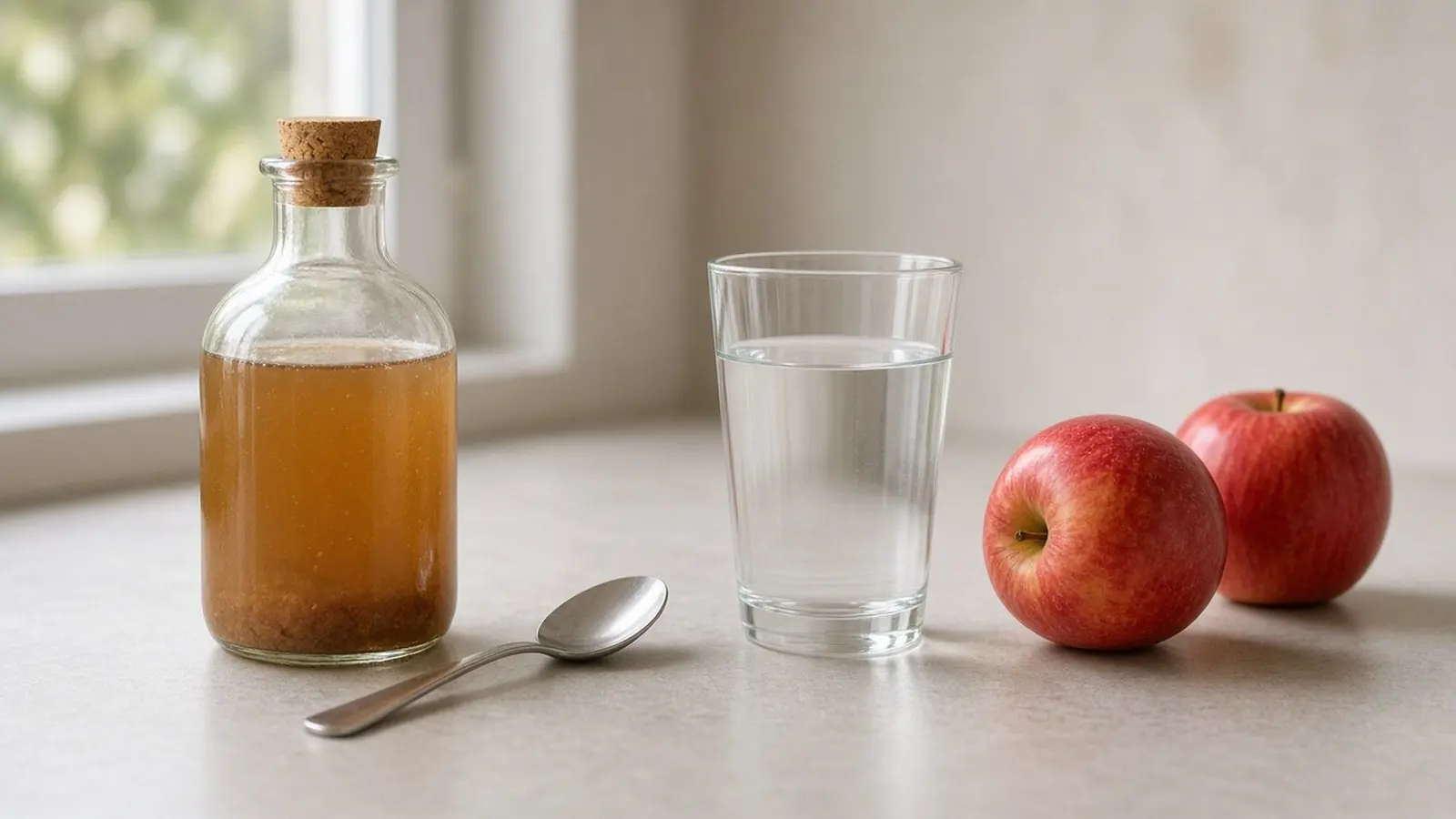
Apple cider vinegar (ACV) is apple juice fermented twice, first to alcohol and then to acetic acid, which is its only active ingredient of note. Pooled trials show it lowers fasting glucose by roughly 8 to 22 mg/dL and total cholesterol by about 6 mg/dL over one to three months; the weight-loss evidence is thinner, and the most-quoted trial was retracted in 2025. Diluted, at 15 mL or less a day, it is low-risk for most adults; undiluted it damages teeth and the gullet.
What is apple cider vinegar?
Apple cider vinegar is apple juice that has been fermented twice: yeast turns the sugar into alcohol, and acetic-acid bacteria turn the alcohol into vinegar. The Cleveland Clinic describes its main active component as acetic acid and notes that it contains little in the way of vitamins, minerals or calories. The cloudy sediment in unfiltered bottles, sold as "the mother", is the raw, unfiltered form; Cleveland Clinic lists the probiotics and antioxidants in raw ACV as plausible but unproven benefits.
Trials use plain, diluted ACV. Hlebowicz and colleagues gave 30 mL in 200 mL of water; the Hadi meta-analysis covered daily doses from 15 mL upwards and found its clearest lipid effects at 15 mL a day or less. One tablespoon is about 15 mL.
What ACV is not:
- A source of nutrients. The calories, vitamins and minerals are negligible.
- A standardised medicine. Cleveland Clinic notes that ACV pills and gummies are not regulated by the US FDA, and a 2005 analysis in the Journal of the American Dietetic Association found that eight ACV tablet products varied widely in pH and acid content and questioned whether some contained apple cider vinegar at all.
- Special among vinegars. Cleveland Clinic names acetic acid as the active component, and every vinegar contains it.
In India the same bottles are sold with or without the mother; synthetic vinegar made from diluted acetic acid is a separate, cheaper product, and the label states which it is.
Does apple cider vinegar lower blood sugar?
Yes, by a small amount in short trials, and the effect on HbA1c is uncertain. Hadi and colleagues pooled nine randomised trials with 686 participants, lasting 30 to 90 days, in BMC Complementary Medicine and Therapies in 2021. ACV lowered fasting plasma glucose by 7.97 mg/dL (95% CI −13.74 to −2.21). The pooled HbA1c fall of 0.50 points came with 91% heterogeneity and became non-significant when a single trial, or the high-risk-of-bias trials, were removed. Fasting insulin and HOMA-IR did not change.
A 2025 meta-analysis by Arjmandfard and colleagues in Frontiers in Nutrition pooled seven controlled trials with 463 adults with type 2 diabetes. Fasting glucose fell by 21.9 mg/dL (95% CI −29.2 to −14.7), rated moderate certainty on GRADE. HbA1c fell by 1.53 points, but with 83% heterogeneity, only four trials, and low certainty. Most trials were Iranian and at high risk of bias; the authors call the HbA1c finding not definitive.
| Outcome | Hadi 2021 (9 trials, mixed) | Arjmandfard 2025 (7 trials, type 2 diabetes) |
|---|---|---|
| Fasting glucose | −7.97 mg/dL | −21.9 mg/dL (moderate certainty) |
| HbA1c | −0.50, not robust | −1.53, low certainty |
| Fasting insulin | No change | Slight rise |
| HOMA-IR | No change | No change |
The Cleveland Clinic's summary is that ACV "might lower your glucose a little, but not enough". A tablespoon in water with a meal is a minor aid, not a replacement for diabetes medicines, and an HbA1c test every three months shows whether anything is changing.
Does apple cider vinegar help weight loss?
The evidence is weak and the best-known trial has been withdrawn. In 2024 BMJ Nutrition, Prevention and Health published a Lebanese trial of 120 overweight people aged 12 to 25 who took 5, 10 or 15 mL of ACV daily for 12 weeks and lost about 5 to 7 kg against 0.3 kg on placebo. On 23 September 2025 the journal retracted it: the analyses "could not be replicated and multiple errors were identified", and the dataset showed "patterns inconsistent with random allocation of participants to treatment groups". The authors agreed to the retraction.
A 2025 meta-analysis by Castagna and colleagues in Nutrients pooled 10 randomised trials of 4 to 12 weeks and found ACV lowered body weight (standardised mean difference −0.39) and BMI (−0.65), with larger effects at 30 mL a day than at 5 to 15 mL. But the retracted Lebanese trial is included and rated low risk of bias, heterogeneity was 62% to 83%, and funnel plots suggested publication bias. Those pooled numbers cannot be trusted until the analysis is redone without the retracted data.
Launholt and colleagues, reviewing 13 human and 12 animal studies in 2020, concluded that "the evidence for the health effects of AV is insufficient". Cleveland Clinic says ACV may make people feel full for about two hours after a meal, with "no concrete evidence" of a lasting effect.
Do not use apple cider vinegar as a replacement for meals or in place of a weight-loss plan from a dietician; the only robust weight finding is that the headline trial was wrong.
Does apple cider vinegar improve cholesterol?
Slightly, for total cholesterol, and not for LDL or HDL in the pooled analysis. In the Hadi meta-analysis, ACV lowered total cholesterol by 6.06 mg/dL (95% CI −10.95 to −1.17) with low heterogeneity (39%). Triglycerides fell by 33.66 mg/dL but the confidence interval touched zero (p = 0.05) with 95% heterogeneity. LDL cholesterol (−2.12 mg/dL) and HDL cholesterol (+0.92 mg/dL) did not change.
Subgroups told a more specific story: in people with type 2 diabetes, total cholesterol fell by 11.51 mg/dL and triglycerides by 22.46 mg/dL; at doses of 15 mL a day or less, triglycerides fell by 21.91 mg/dL and total cholesterol by 10.22 mg/dL; and in trials longer than eight weeks, triglycerides fell by 48.22 mg/dL. The authors suggest about 15 mL a day as the dose with the clearest effect, while noting that meta-regression found no dose relationship, and that most trials did not control diet.

For scale, a 6 mg/dL fall in total cholesterol is about 3% for someone at 200 mg/dL, and ACV did not move LDL cholesterol at all. Anyone using ACV for cholesterol should know their lipid profile before and after, and should not expect a vinegar to replace treatment prescribed for high LDL.
What are the risks of apple cider vinegar?
Acid damage to teeth and gullet, low potassium with heavy use, slowed stomach emptying, and interactions with diabetes and blood-pressure medicines.
- Tooth enamel. A 2012 Dutch case report describes erosive tooth wear in a 15-year-old who drank a glass of apple cider vinegar daily for weight loss. Cleveland Clinic says the acidity can erode enamel permanently.
- Gullet and throat. Cleveland Clinic warns that undiluted acetic acid can burn the oesophagus; the 2005 tablet study was prompted by a reported oesophageal injury from an ACV tablet.
- Potassium and bone. A 1998 case report in Nephron describes hypokalaemia, high renin and osteoporosis in a patient who ingested large amounts of cider vinegar. Cleveland Clinic advises people with low potassium to avoid ACV and lists diuretics and laxatives as interacting medicines.
- Stomach emptying. Hlebowicz and colleagues gave 30 mL of ACV in water to 10 people with type 1 diabetes and gastroparesis: the gastric emptying rate fell from a median of 27% to 17%. Slower emptying makes insulin timing harder.
- Blood sugar medicines. Cleveland Clinic lists insulin among the drugs ACV interacts with, and Hlebowicz and colleagues advised closer glucose monitoring and possible insulin adjustment.
- Stomach upset. The Hadi trials reported stomach burning and intolerance; Cleveland Clinic adds nausea and vomiting.
Go to a hospital the same day, or call 112, if someone has swallowed undiluted vinegar or a tablet and has chest pain, difficulty swallowing or vomiting blood; see a doctor within days for muscle weakness, cramps or palpitations in a regular heavy user, which can signal low potassium.
How do you use apple cider vinegar safely?
Dilute it, keep it small, take it with food, and tell the doctor if you take diabetes or blood-pressure medicines. Cleveland Clinic's practical advice: add about a tablespoon to a mug of warm water, start with a few drops in water if new to it, and do not exceed two tablespoons (30 mL) a day. The Hadi meta-analysis found its clearest lipid effects at 15 mL a day or less, so one tablespoon is the evidence-based ceiling for most people.
Rules that follow from the risks above:
- Never drink it neat, and do not sip it through the day; a single diluted dose with a meal limits acid contact with teeth. Rinse the mouth with water afterwards.
- Avoid tablets and gummies; the 2005 analysis found their acid content unpredictable, and Cleveland Clinic notes they are unregulated.
- Skip it with low potassium, kidney disease, or regular diuretics or laxatives unless a doctor agrees.
- With diabetes, check glucose more often for the first two weeks, as Hlebowicz and colleagues advised for insulin users, and watch for lows.
- With gastroparesis, be cautious, as Cleveland Clinic advises; for heartburn it has no evidence of benefit.
- Stop if there is burning, nausea or new throat symptoms.
What it is for, at best, is a small extra on top of a meal plan a dietician sets. A person whose fasting glucose or cholesterol is high needs the diagnosis and the treatment first; ACV neither diagnoses nor treats anything on its own.
What does this mean for people in India?
India has a large population for whom the small glucose effect is tempting and the hypoglycaemia risk is real. The ICMR-INDIAB survey of 113,043 adults, published in The Lancet Diabetes and Endocrinology in 2023, found diabetes in 11.4% and prediabetes in 15.3% of Indian adults. The Hadi meta-regression found larger glucose reductions in people with higher baseline glucose, which is exactly the group most likely to be on insulin and most exposed to an unplanned extra drop on top of slower stomach emptying.
Practical points:
- Anyone with diabetes should get a baseline HbA1c test and lipid profile and repeat them after three months rather than judging by how they feel.
- Government district hospitals and medical colleges run diabetes clinics where these tests are done at low cost; private lab prices are listed on HealthFinder.
- The trials used plain diluted apple vinegar; no cited study shows the mother adds anything, and synthetic vinegar was not what was tested.
The honest summary is that ACV is a condiment with a small, short-term effect on fasting glucose and total cholesterol, a weak and partly discredited record on weight, and a short list of well-documented harms from overuse. Used as a tablespoon in water with a meal, it is unlikely to hurt a healthy adult; used as a treatment, it will disappoint.
This guide is general information from the sources listed below, not medical advice; a registered doctor makes decisions with you.