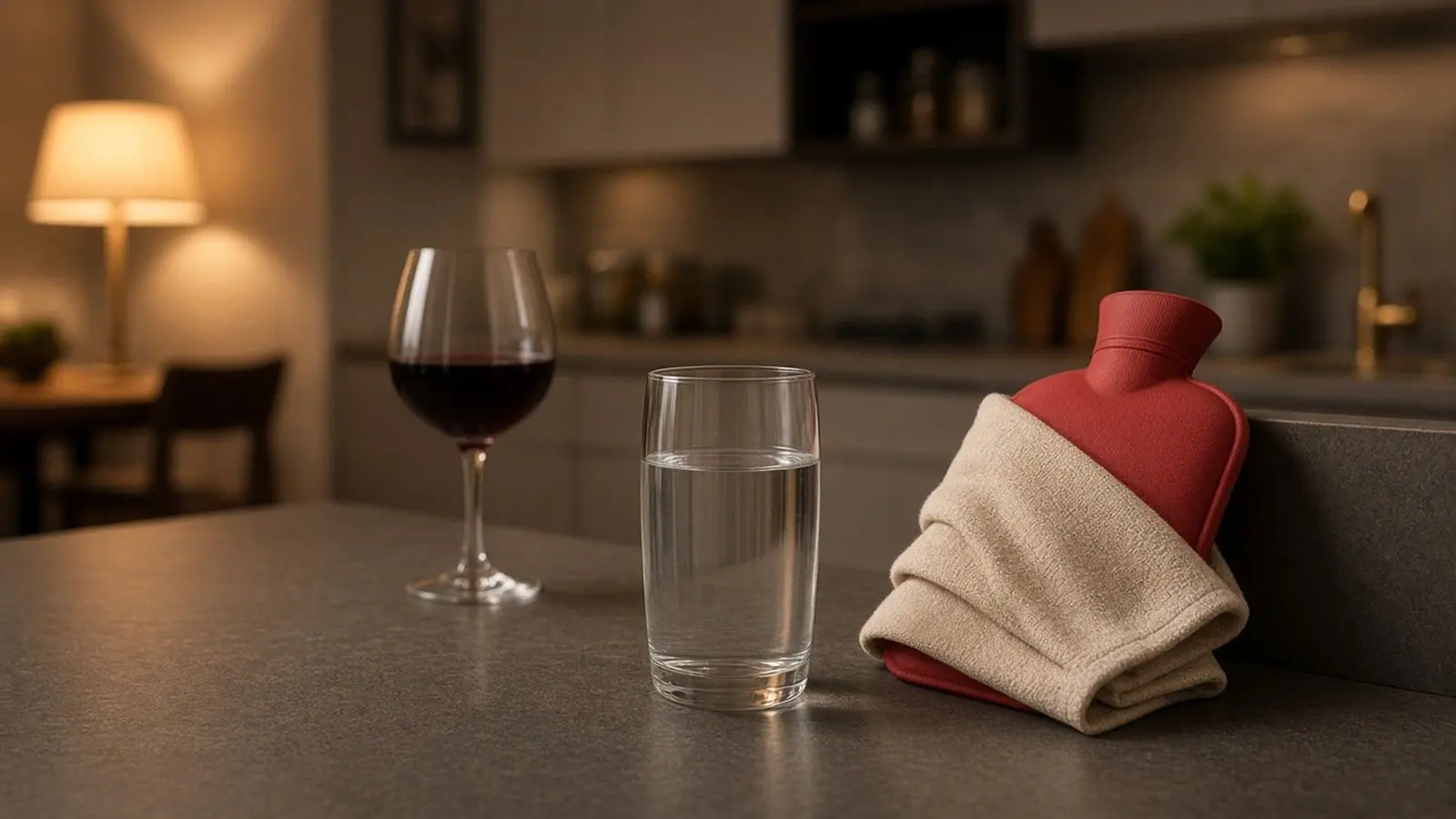
You can drink alcohol during your period; no health authority bans it. But none recommends it either. The NHS lists cutting down on alcohol among the things that may ease period pain, alcohol dehydrates you and fragments sleep, and drinking a lot with ibuprofen, naproxen or mefenamic acid raises the risk of stomach bleeding. The same low-risk limits apply on your period as on any other day.
Is it safe to drink alcohol during your period?
Yes, in the sense that no health authority tells menstruating women to avoid alcohol, and the risks of drinking on your period are the same risks alcohol carries on any day. The NHS, NIAAA and WHO pages opened for this guide do not single out menstruation as a time to abstain. What they do say is that less is better. The WHO's 2023 statement in The Lancet Public Health says there is "no safe amount that does not affect health", and NIAAA says "drinking less is better for health than drinking more".
The old idea that a drink soothes cramps has no support in these sources. The NHS period pain page lists the opposite: alongside heat, a warm bath, gentle exercise and painkillers, it says that "cutting down on alcohol" and not smoking may also ease period pain.
There are four specific ways alcohol can make a period worse, each covered below:
- it dehydrates you, which adds to fatigue and headache
- it irritates the stomach lining and disturbs sleep, which adds to nausea and tiredness
- it is linked to worse premenstrual mood symptoms
- it raises the risk of stomach bleeding when combined with the anti-inflammatory painkillers most women take for cramps
None of these is a reason to panic over one glass. They are reasons to keep to low-risk amounts, skip it when the painkillers are out, and never treat alcohol as a remedy.
Does alcohol make period cramps worse?
The NHS suggests it can: its period pain page says cutting down on alcohol "may also ease period pain". It does not explain why, and no trial opened for this guide measured cramp intensity after drinking, so the honest answer is that the direction is probably unhelpful and the size of the effect is unknown.
The mechanisms NIAAA describes fit that direction. Its hangover fact sheet says "alcohol increases inflammation in the body", that it "directly irritates the lining of the stomach and increases acid release", and that the mild dehydration it causes contributes to "thirst, fatigue, and a headache". Period pain already comes with nausea, tiredness and sometimes headache for many women, so adding a second cause of each is unlikely to feel better the next morning.
What the NHS says actually helps period pain:
- paracetamol or ibuprofen
- a heat pad or hot water bottle wrapped in a tea towel on the tummy
- a warm bath or shower
- gentle exercise such as yoga, swimming, walking or cycling
- massaging the tummy and back
The NHS says period pain happens "when your womb tightens during your period" and is usually normal, but it can be caused by endometriosis, adenomyosis, fibroids, pelvic inflammatory disease or an IUD in the first 3 to 6 months. Pain that is severe, worse than usual and not helped by painkillers needs urgent advice, and a gynaecologist should see anyone whose periods are becoming more painful, heavier or irregular. Alcohol will not mask any of those conditions, but it can delay the visit.
Does alcohol change how much you bleed or how long your period lasts?
For moderate drinking, no. A 2015 prospective cohort study in the American Journal of Clinical Nutrition followed 259 healthy premenopausal women for up to two cycles with blood samples at up to eight visits per cycle. It found that cycle-average alcohol intake was not significantly associated with any marker of cycle dysfunction, including short or long cycles and sporadic anovulation.
Alcohol does move hormones, though. In the same study, each additional drink per day was associated with about 5.3% higher total oestradiol, 1.6% higher testosterone and 6.2% higher luteinising hormone. Binge drinking (4 or more drinks on the previous day) was associated with about 64% higher oestradiol, based on only 27 binge reports from 11 women.

Heavy, long-term drinking is a different story. A review in Alcohol Research & Health, NIAAA's journal, reports that women with alcohol dependence have disorders ranging "from irregular menstrual cycles to complete cessation of menses", plus anovulation and infertility, and that alcohol abuse is associated with early menopause. The authors caution that liver disease and malnutrition in heavy drinkers may explain part of this.
So a drink or two during a period will not make it heavier or longer on current evidence. Regular heavy drinking can make cycles irregular, and irregular cycles can then produce heavier, longer bleeds. None of the sources suggests alcohol changes the volume of a single period.
Does alcohol worsen period mood swings and PMS?
The evidence links alcohol with worse premenstrual symptoms, though it cannot prove which causes which. A 2018 systematic review and meta-analysis in BMJ Open by Fernández and colleagues pooled 19 studies from eight countries and found that alcohol intake was associated with a 45% higher odds of premenstrual syndrome (odds ratio 1.45, 95% CI 1.17 to 1.79). Heavy drinking was associated with 79% higher odds (OR 1.79, 95% CI 1.39 to 2.32). The authors estimated that 11% of PMS cases worldwide may be associated with alcohol. They also warned that reverse causation, women with PMS drinking to ease symptoms, is plausible.
The short-term effect on mood is clearer. NIAAA says that while drinking, people may feel calmer or euphoric, but the brain adjusts, and "when the buzz wears off, people can feel more restless and anxious than before they drank". It lists anxiety and irritability among typical hangover symptoms. On sleep, NIAAA says "people may fall asleep faster after drinking alcohol, but their sleep is fragmented, and they tend to wake up earlier", which feeds the next day's fatigue.
The NHS says regular drinking at high-risk levels "can make your mental health worse".
For a woman whose period already brings low mood, irritability or poor sleep, the pattern in these sources is consistent: alcohol can feel like relief for an hour and then make each of those symptoms worse. If premenstrual mood symptoms are severe every month, that is a reason to see a doctor, not a reason to drink through them.
Does alcohol dehydrate you more on your period?
Alcohol dehydrates you the same way on any day, but the fatigue and headache it causes stack on top of period symptoms. NIAAA's hangover fact sheet explains the mechanism: "alcohol suppresses the release of vasopressin", the hormone that tells the kidneys to hold on to fluid. "As a result, alcohol increases urination and excess loss of fluids." The resulting mild dehydration "likely contributes to hangover symptoms such as thirst, fatigue, and a headache".
No source opened for this guide shows that menstruation itself makes dehydration worse, and the old claim that dehydration thickens period blood into painful clots has no support in any of them. What they do support is simpler: alcohol adds a second cause of tiredness and headache.
Practical steps the sources justify:
- Drink water alongside any alcohol, and more if the weather is hot.
- Eat before drinking; the NHS advises taking anti-inflammatory painkillers with or after food to protect the stomach, and the same meal slows alcohol absorption.
- Stop at the NHS binge threshold of 6 units in one session for women, roughly three standard 175 ml glasses of wine.
- Expect worse sleep that night, and plan the next morning accordingly.
In India's hot months this matters more. If dizziness or palpitations appear with heavy bleeding, pale skin or breathlessness, that is an anaemia warning rather than a hangover and needs a doctor and a blood count the same day.
Is it safe to mix alcohol with period painkillers?
No, not in any quantity that counts as a drinking session. Ibuprofen, naproxen and mefenamic acid are all non-steroidal anti-inflammatory drugs (NSAIDs), and NSAIDs can cause stomach ulcers and bleeding. The NHS ibuprofen page says to "try to avoid drinking a lot of alcohol because this can increase the risk of side effects", and lists "stomach ulcers or bleeding inside your stomach" among the serious side effects. The NHS naproxen page says to "try to limit how much alcohol you drink while taking it" because "alcohol can increase the risk of side effects such as stomach ulcers or bleeding".
The risk compounds. NIAAA says alcohol "directly irritates the lining of the stomach and increases acid release", and the NHS says the risk of serious side effects rises with high doses and long courses, the pattern of taking painkillers every few hours for three days of cramps.
Stop the painkiller and see a doctor the same day, or call 112, if you vomit blood or something that looks like coffee grounds, pass black tar-like stools, have severe stomach pain, or feel faint. The NHS lists these as signs of bleeding inside the stomach.
The NHS advice applies whether or not you drink: take NSAIDs with or after food, do not combine two NSAIDs, and avoid them if you have had a stomach ulcer. Paracetamol is not an NSAID and the NHS period pain page lists it as an alternative. If you plan to drink in the evening, leave the ibuprofen or mefenamic acid out that day.
How much alcohol is low-risk, and when should you skip it entirely?
The low-risk limit is 14 units a week spread over 3 or more days (NHS), or 1 drink or less a day for women who drink (NIAAA). Neither changes during a period.
| Measure | NHS (UK units) | NIAAA (US standard drinks) |
|---|---|---|
| Low-risk weekly amount | Not more than 14 units a week, spread over 3 or more days | 1 drink or less on any day when alcohol is consumed |
| One drink equals | 175 ml wine at 12% = 2.1 units; pint of 5.2% beer = 3 units; 25 ml spirit = 1 unit | One standard drink |
| Binge | More than 6 units in a single session for women | 4 or more drinks in about 2 hours for women |
The NHS says 14 units equals 6 pints of average-strength beer or 10 small glasses of lower-strength wine, and that regularly drinking more for years raises the risk of mouth, throat and breast cancer, stroke, heart, liver and brain disease. The WHO adds that most alcohol-attributable breast cancers come from light and moderate, not heavy, drinking.
Times to skip alcohol altogether:
- You are pregnant or might be; NIAAA says such women should avoid alcohol completely.
- You are taking ibuprofen, naproxen or mefenamic acid that day.
- Your period is unusually heavy or long, or you feel faint, breathless or have palpitations.
- Your period pain is severe and painkillers have not helped; the NHS says that needs urgent advice.
This guide is general information from the sources listed below, not medical advice; a registered doctor makes decisions with you.