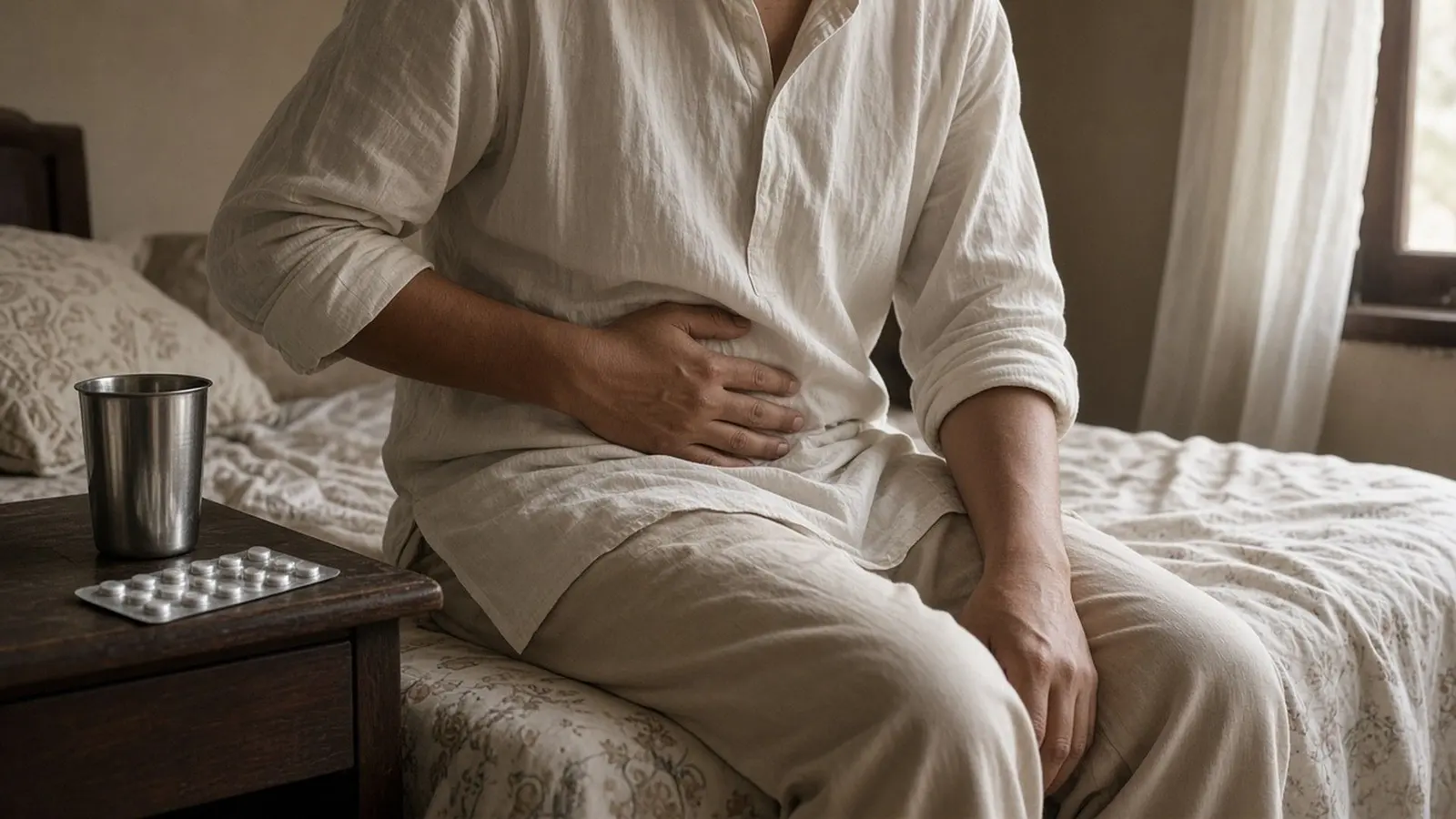
A bigger belly after gallbladder surgery is usually trapped gas from the keyhole operation, bloating while digestion adjusts, or constipation from painkillers and rest. MedlinePlus says the gas pain eases over several days to a week, and loose stools can last 4 to 8 weeks. A belly that keeps swelling, with fever, yellow skin or a hard lump at a wound, is not normal and needs a doctor the same day.
Why does the belly look bigger right after gallbladder surgery?
The belly looks bigger right after laparoscopic (keyhole) gallbladder surgery because the surgeon fills the abdomen with carbon dioxide gas to make room to work, and some of that gas stays behind. MedlinePlus says the gas left in the belly causes pain that can spread to one or both shoulders, and that this eases over several days to a week. A 2021 randomised trial in the World Journal of Surgery (147 patients) explains the mechanism: trapped carbon dioxide stretches and irritates the diaphragm, and the phrenic nerve refers that irritation to the shoulder. In that trial 63.4% of patients who had standard care reported shoulder pain within 48 hours of surgery.
The gas is not the only reason the waistband feels tight. Cleveland Clinic says bowel gas and gas pain are a side effect of the gas used in laparoscopic surgery, and that for the first month or so most people have more trouble digesting fats and heavier meals. Swelling and bruising around the four small wounds add a little to the look of the abdomen. Open surgery (a single 10 to 15 cm cut) swells more and for longer, and Cleveland Clinic puts recovery at 6 to 8 weeks for open surgery against about 2 weeks for keyhole surgery.
None of this is dangerous on its own. Walking, which MedlinePlus advises from the first day, moves gas through the bowel and is the quickest way to reduce the distension.

How long does post-surgery bloating last?
Bloating from surgical gas settles within about a week, and bloating from changed digestion usually settles within a few months. MedlinePlus puts full recovery from keyhole gallbladder removal at up to 6 weeks, with loose stools after eating for 4 to 8 weeks and sometimes longer. A 2025 study in the Pakistan Journal of Medical Sciences followed 1,002 people for a year after laparoscopic cholecystectomy; 139 (13.9%) had severe gut symptoms, and 43.2% of that group reported bloating. Their symptoms started a median of 2 weeks after surgery and resolved at a median of 12 weeks, with about 22% lasting beyond 15 weeks.
| Symptom | Usual cause | How long it lasts | Source |
|---|---|---|---|
| Belly and shoulder pain, tight abdomen | Carbon dioxide left after keyhole surgery | Several days to a week | MedlinePlus |
| Trouble with fatty or heavy meals | Bile now drips into the gut instead of being stored | First month or so | Cleveland Clinic |
| Loose stools after eating | More bile reaching the bowel | 4 to 8 weeks, sometimes longer | MedlinePlus, NIDDK |
| Severe bloating, urgency, frequent stools | Post-cholecystectomy symptoms | Median 12 weeks (range 4 to 40) | Pak J Med Sci 2025 |
The NHS lists nausea, indigestion, abdominal pain and diarrhoea under post-cholecystectomy syndrome and says these usually improve soon after surgery; it tells patients to contact their GP or care team if they continue. Cleveland Clinic calls the long-term diagnosis usually temporary.
Can constipation make the belly look bigger after surgery?
Yes. Constipation is one of the commonest reasons the belly stays swollen in the first two weeks, and it comes from three things that happen together after an operation. The NHS lists the causes: side effects of medicines (it names opioid painkillers), little physical activity and long periods of sitting or lying down, and changes to diet or daily routine. Cleveland Clinic links constipation after gallbladder surgery directly to pain medication. The NHS tells people who are often bloated or have tummy pain with constipation to see a GP rather than wait.
Self-help from the NHS works for most people within a few days to a few weeks:
- Add fibre gradually: wheat bran, oats, linseed, and fruit such as apples and apricots.
- Drink plenty of fluids and avoid alcohol. MedlinePlus advises 8 to 10 glasses of water a day after gallbladder surgery to ease bowel movements.
- Walk daily. MedlinePlus says to start walking after surgery and build up.
- Do not ignore the urge to go. Rest your feet on a low stool so your knees sit above your hips on the toilet.
- If nothing changes, a pharmacist can suggest a short course of laxative; the NHS says most work within 3 days.
Do not stop a prescribed painkiller on your own. The NHS says to speak to the doctor first, who can switch to a non-opioid option or add a laxative.
Does losing the gallbladder change digestion and weight?
Removing the gallbladder changes how bile reaches the gut, and that change explains most of the bloating and loose stools. The NIDDK says that without a gallbladder, bile flows from the liver through the hepatic and common bile ducts straight into the duodenum instead of being stored first, so a small number of people have softer, more frequent stools because bile enters the bowel more often. The NIDDK calls these changes usually temporary.
The numbers on diarrhoea are clearer than the numbers on weight. A 2022 systematic review in BMJ Open pooled 21 studies with 3,476 patients and found post-cholecystectomy diarrhoea in 462 (13.3%), with study rates ranging from 2.1% to 57.2%. The review found no consistent predictor, although younger age, high body mass index and heartburn or gastritis before surgery appeared in several studies.
Weight change is less settled. A 2025 study in the World Journal of Clinical Cases followed 65 patients for a year and found weight gain of more than 2 kg in 29.0% of obese and 20.6% of non-obese patients, with no significant difference between the groups and no clear explanation. If the waist keeps growing after three months, the cause is usually food intake rather than the operation, and a gastroenterologist can check for other causes such as bile acid diarrhoea or a retained stone.

Which symptoms after gallbladder surgery are red flags?
A belly that is swollen and also painful, hot, yellow or vomiting is a complication until proven otherwise. The NHS lists bile leaking into the abdomen (rare, needs another operation to drain it), injury to the bile ducts (a small chance), wound infection (uncommon, treated with antibiotics), retained stones causing pain and jaundice, and blood clots. A hernia at a port wound is rare; a 2020 study in Scientific Reports of 2,930 laparoscopic cholecystectomies found trocar-site hernias in 0.20%, usually at the navel port, as a painless lump that slowly grows within the first year.
See a doctor the same day if you have a temperature above 38.3 °C (101 °F); yellow skin or yellow whites of the eyes; grey or pale stools; pain that painkillers do not relieve or that keeps getting worse; a wound that bleeds, turns red, hot or swollen, or leaks thick yellow or green fluid; a lump at a wound that becomes painful, hard or changes colour; vomiting with a bloated tummy; or one leg that is swollen, tender or cramping. Call 112 or go to the nearest emergency department if leg pain comes with chest pain or difficulty breathing, which the NHS says can mean a clot in the lung.
These lists come from the NHS and MedlinePlus discharge advice. In India, a government district hospital or a medical college emergency department can treat a bile leak or infection. An abdominal ultrasound is the usual first scan for a fluid collection, a blocked bile duct or a retained stone.
What should I eat after gallbladder surgery to reduce bloating?
Eat a normal, healthy diet in small portions. The NHS says to eat a normal, healthy diet after gallbladder removal, and that smaller meals may be easier for the first few days. Cleveland Clinic advises starting with simple, bland food, warns that high-fibre and high-fat foods may be hard to digest at first, and says most people return to a normal diet after recovery. MedlinePlus adds a high-fibre diet, 8 to 10 glasses of water a day, and avoiding greasy or spicy food for a while.
A practical plan for an Indian kitchen, built on those rules:
- Week 1: khichdi, dal with less tadka, curd, boiled vegetables, idli, roti without ghee, bananas and papaya. Five or six small meals instead of three large ones.
- Weeks 2 to 4: add normal home food slowly, one new item at a time. Keep fried snacks, cream, butter-heavy gravies and very spicy food for later, because Cleveland Clinic says fat is the hardest thing to digest in the first month.
- From week 4: a normal diet. Fibre from vegetables, fruit, oats and whole grains keeps stools formed and prevents the constipation that swells the belly.
No food needs to be avoided for life. Loose stools that continue beyond 8 weeks, or bloating that is worse at three months than at three weeks, are the point to see a doctor rather than change the diet again. This guide is general information from the sources listed below, not medical advice; a registered doctor makes decisions with you.