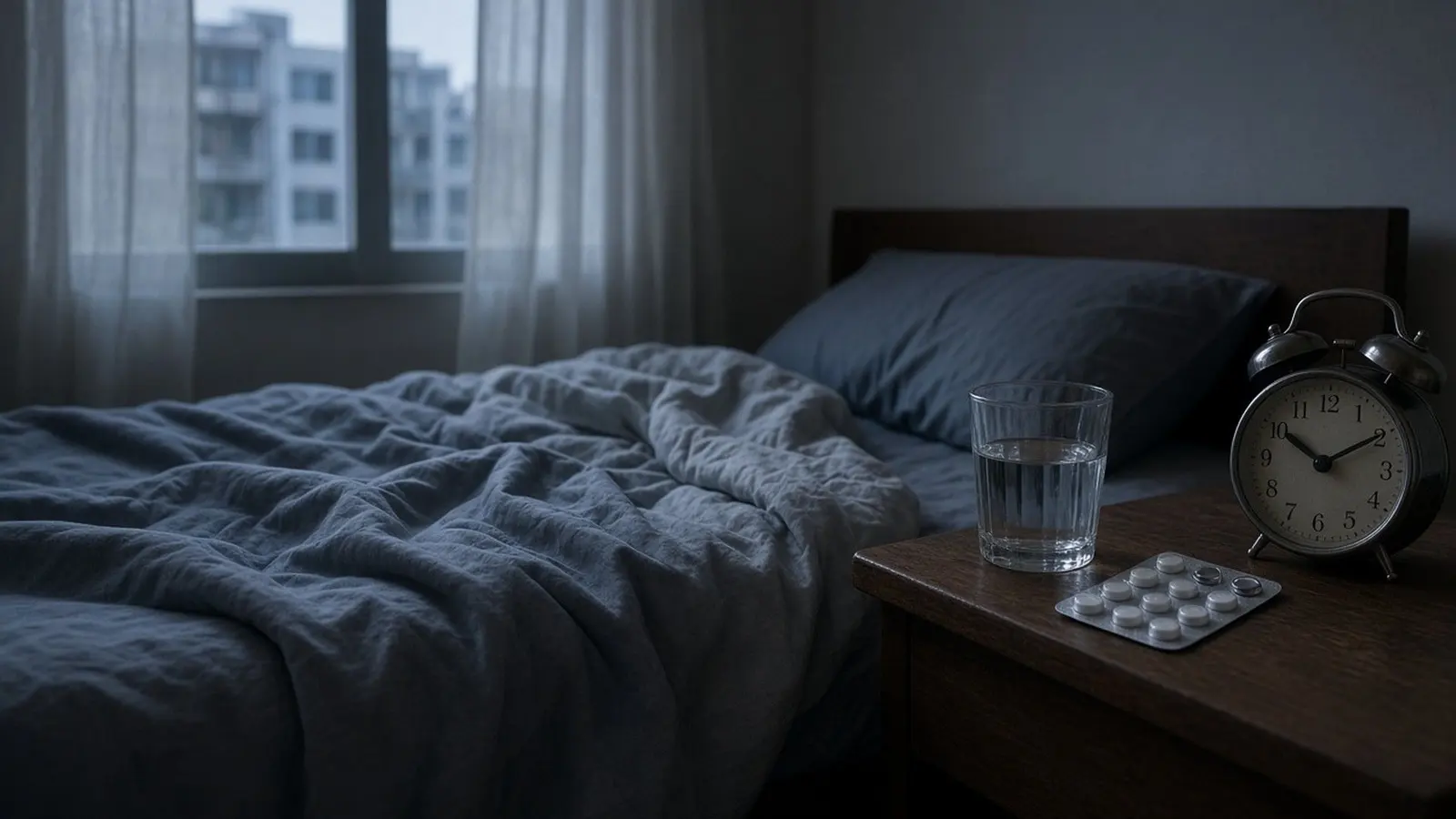
A headache on waking usually comes from something that happened overnight: breathing pauses from sleep apnoea, jaw clenching, alcohol, too little water, or painkillers and caffeine wearing off. A 2004 survey of 18,980 Europeans found that about 1 adult in 13 has chronic morning headaches, and the strongest links were depression, anxiety and insomnia rather than any single disease. A headache that starts suddenly and is extremely painful, or comes with weakness, confusion or fever, is an emergency.
What causes a headache when you wake up?
Most morning headaches come from poor or disturbed sleep, from something taken the night before, or from a headache disorder such as migraine that peaks in the early hours. The best population data is a 2004 telephone survey published in Archives of Internal Medicine: 18,980 people aged 15 and over in the UK, Germany, Italy, Portugal and Spain. 7.6% reported chronic morning headaches, with 1.3% having them daily. Women (8.4%) were affected more than men (6.7%), and people aged 45 to 64 most of all (about 9%).
The factors most strongly tied to morning headache in that survey were not sleep apnoea. They were:
- Combined anxiety and depressive disorders: 28.5% had morning headaches, against 5.5% of people without those disorders.
- Major depression alone: 21.3%.
- Circadian rhythm disorder: 20.0%; insomnia: 14.4%.
- Sleep-related breathing disorder: 15.2% versus 7.5%.
- Heavy alcohol use: 12.6% versus 7.7%; hypertension: 11.0% versus 7.2%.
The author concluded that chronic morning headache is a good marker for depression and insomnia and is not specific to sleep apnoea.

The NHS adds everyday causes that apply at any time of day: a cold, stress, too much alcohol, bad posture, eyesight problems, skipped meals, dehydration, overuse of painkillers, and periods or menopause. It also warns not to sleep more than usual, because oversleeping can make headaches worse. The sections below take the causes one at a time, then put them side by side in a table of clues.
Is sleep apnoea causing my morning headache?
Sleep apnoea is the first thing to rule out if you snore loudly, wake gasping, or feel exhausted by day. The NHS lists headaches on waking among its daytime symptoms, alongside tiredness, trouble concentrating and mood swings; the night-time signs are breathing pauses, gasping, snorting or choking, frequent waking and loud snoring.
Treating the apnoea tends to clear the headache. A 2023 study in Scientific Reports reviewed 116 adults with obstructive sleep apnoea treated with positive airway pressure (PAP, the family that includes CPAP) for three months. Morning headache fell from 53.4% of patients before treatment to 16.4% after, and headache severity roughly halved. The improvement in headache tracked the improvement in daytime sleepiness. The study was retrospective and mostly men, so it shows an association, not proof of mechanism.
The NHS describes diagnosis as a referral to a sleep clinic, where you wear monitoring devices overnight, usually at home. Severity is scored by the AHI, the number of breathing events per hour: 5 to 14 is mild, 15 to 30 moderate, over 30 severe. Treatment starts with weight loss, stopping smoking and drinking less, then a CPAP machine that keeps the airway open with gentle air pressure. Risk factors include obesity, a large neck, older age, family history, alcohol, smoking, large tonsils and sleeping on your back.
Untreated sleep apnoea raises the risk of high blood pressure, stroke, type 2 diabetes, heart disease and depression (NHS). In India, sleep studies are run by pulmonologists, ENT surgeons and neurologists at larger hospitals.
Could teeth grinding be the cause?
Grinding or clenching your teeth in your sleep, called bruxism, is a common cause of a dull headache on waking. The NHS lists headaches and earache, jaw, face or ear pain, worn, broken or sensitive teeth, and disturbed sleep as its symptoms. Most people do not know they grind; a partner hears it, or a dentist spots the wear.
The NHS names stress and anxiety as the most common cause. Other causes it lists are sleep problems such as snoring and sleep apnoea, some medicines for sleep, depression or anxiety, smoking, and heavy drinking of alcohol or caffeine. Because sleep apnoea sits on that list, the two causes often travel together, and a morning headache with jaw ache and loud snoring deserves a check for both.
Self-help from the NHS:
- Relax before bed with breathing exercises, music or regular exercise, and keep a regular bedtime in a dark, quiet room.
- Use paracetamol or ibuprofen and an ice pack wrapped in a tea towel for a sore jaw.
- Avoid smoking, excess alcohol and caffeine, and skip chewing gum or hard foods while the jaw hurts.
See a dentist if you have tooth damage, sensitive teeth, or jaw, face or ear pain, or if someone has heard you grinding at night. The dentist may make a custom mouth guard or splint to wear at night to protect the teeth. A GP can help if stress, anxiety, smoking, alcohol or drug use is driving it.
Can painkillers cause morning headaches?
Yes. Taking headache painkillers too often produces a headache of its own, and it is typically there when you wake. The Cleveland Clinic calls this medication overuse headache, or rebound headache, and lists headaches on waking or soon after as a symptom, together with nausea, fatigue, poor concentration and low mood. The pattern is that the medicine relieves the pain, the relief wears off, and the headache returns, often harder.
The thresholds the Cleveland Clinic gives:
| Medicine | Use that risks rebound headache |
|---|---|
| Paracetamol, NSAIDs such as ibuprofen, triptans | 15 or more days a month |
| Opioids and opioid combinations | 10 or more days a month |
| Diagnosis | Regular use for at least 3 months, with headache on 15 or more days a month |
It affects about 1% of people worldwide, is more common in women aged 30 to 50, and migraine is the underlying disorder in about 80% of cases. The NHS tension headache page gives the same warning without a number: taking painkillers for headaches too often or for a long time can itself cause headaches. The Cleveland Clinic's neurologist puts the practical limit at pain relievers on more than two days a week.
Treatment is to stop the overused medicine, with a gradual taper for opioids, and most people improve within two months. A neurologist can add a preventive migraine treatment so you need fewer rescue tablets.
Do alcohol, dehydration and caffeine cause morning headaches?
All three do, and they often act together. The NHS lists too much alcohol and dehydration among the common causes of headache, and heavy alcohol use was linked to morning headache in the 2004 survey (12.6% versus 7.7%). The Cleveland Clinic's neurologist notes that alcohol and excess caffeine both increase fluid loss, and the NHS dehydration page lists heavy alcohol use as a cause of dehydration.
Dehydration itself produces a headache. The NHS lists headache, thirst, light-headedness, tiredness, a dry mouth and peeing less than usual as its symptoms, with dark yellow, strong-smelling pee as the warning sign. The advice is to drink enough through the day to keep pee pale, and to avoid alcohol and caffeine while rehydrating.
Caffeine works in the other direction. MedlinePlus says that stopping regular caffeine suddenly causes headaches, drowsiness, irritability and poor concentration, which usually go away after a couple of days. Because the longest gap between cups is overnight, the withdrawal headache often lands in the morning. The Cleveland Clinic says an abrupt drop after heavy intake the previous day can trigger a migraine, and suggests a steady 100 to 150 mg a day rather than swings; MedlinePlus puts the safe ceiling for most adults at 400 mg a day. For reference, MedlinePlus lists an 8-ounce cup of coffee at 95 to 200 mg and a cup of tea at 14 to 60 mg, so three or four cups of strong chai is a real habit that needs tapering, not stopping overnight.
Does high blood pressure or sleep position cause it?
High blood pressure rarely causes a headache, and sleep position is a plausible but poorly studied cause.
The NHS says high blood pressure does not usually cause any symptoms, which is why many people do not know they have it. It lists headaches, blurred vision and chest pain as rare symptoms, and says to seek advice if you often have headaches or blurred vision. The diagnostic threshold is 140/90 or higher at a clinic, or 135/85 at home. In the 2004 survey, 11.0% of people with hypertension had chronic morning headaches against 7.2% of those without. Sleep apnoea, which does cause morning headaches, also raises blood pressure (NHS), so a morning headache plus a high reading is a reason to ask about snoring. A general physician or cardiologist can check and treat the pressure.
Sleep position and pillows are a reasonable suspect when the headache sits in the neck or the back of the head. The NHS lists bad posture as a headache cause, and its tension headache page advises a low, firm pillow and heat or cold packs for neck pain. In the 2004 survey, musculoskeletal disease went with morning headache (14.1% versus 7.1%). None of the opened sources tested pillow height or sleeping position directly, so this guide stops there.
Migraine is the other big morning cause. A Cleveland Clinic neurologist explains that hormone shifts between about 4 a.m. and 8 a.m. may make pain pathways more sensitive in people with migraine, which is why attacks often start or worsen on waking.
Which clue points to which cause?
Each row uses symptoms from the sources named above.
| Likely cause | Clues that point to it | Who to see |
|---|---|---|
| Sleep apnoea | Loud snoring, gasping at night, exhausted by day, large neck or obesity (NHS) | Sleep clinic via a pulmonologist, ENT or neurologist |
| Teeth grinding | Jaw, face or ear ache, worn or sensitive teeth, partner hears grinding, stress (NHS) | Dentist |
| Medication overuse | Painkillers on 15 or more days a month for 3 months, pain returns as each dose wears off (Cleveland Clinic) | Neurologist |
| Alcohol | Drank the night before, thirst, dark urine (NHS) | Self-care; GP if drinking is heavy |
| Dehydration | Dark, strong-smelling pee, dry mouth, dizziness, hot night (NHS) | Self-care |
| Caffeine withdrawal | Heavy daily tea or coffee, eases after the first cup, worse when you skip it (MedlinePlus) | Self-care; taper |
| Migraine | Throbbing, one-sided, sick or light-sensitive, starts between 4 and 8 a.m. (Cleveland Clinic) | Neurologist |
| High blood pressure | Usually no symptoms; headache with blurred vision is rare and needs a check (NHS) | General physician or cardiologist |
| Depression, anxiety, insomnia | Low mood, worry, poor sleep; the strongest links in the 2004 survey | Psychiatrist or GP |
Causes stack: the NHS lists alcohol, caffeine and sleep apnoea as causes of teeth grinding, and apnoea as a cause of high blood pressure. Keep the headache diary the NHS recommends, noting sleep, drinks and tablets.
When is a morning headache a red flag?
A morning headache is a red flag when it is new and different, getting steadily worse, or comes with neurological symptoms. The NHS brain tumour page says to see a GP if a headache feels different from the type you usually get or if headaches are getting worse, particularly with persistent nausea, vomiting or drowsiness, seizures, memory or personality changes, weakness on one side, or vision or speech problems. It adds that you may not have a tumour, but these symptoms need checking; a GP who cannot find a likelier cause refers you to a neurologist for a brain scan.
Call 112 or go to the nearest emergency department now if a headache started suddenly and is extremely painful; comes with a seizure, numbness or weakness in the face or body, difficulty speaking, loss of vision, drowsiness or confusion; follows a head injury in the last 3 months; or comes with a very high temperature, a stiff neck, a rash that does not fade under a glass, or bright lights hurting your eyes (NHS 999 list).
The NHS also wants same-day advice for a headache with vision problems, vomiting, jaw pain when eating or a sore scalp, or a child's headache that worsens or wakes them.
When a neurologist does order one, an MRI scan is the usual choice for headache, and a CT scan is used in emergencies; both are available at government hospitals. This guide is general information from the sources listed below, not medical advice; a registered doctor makes decisions with you.